product design • ux strategy
E-Commerce WOM
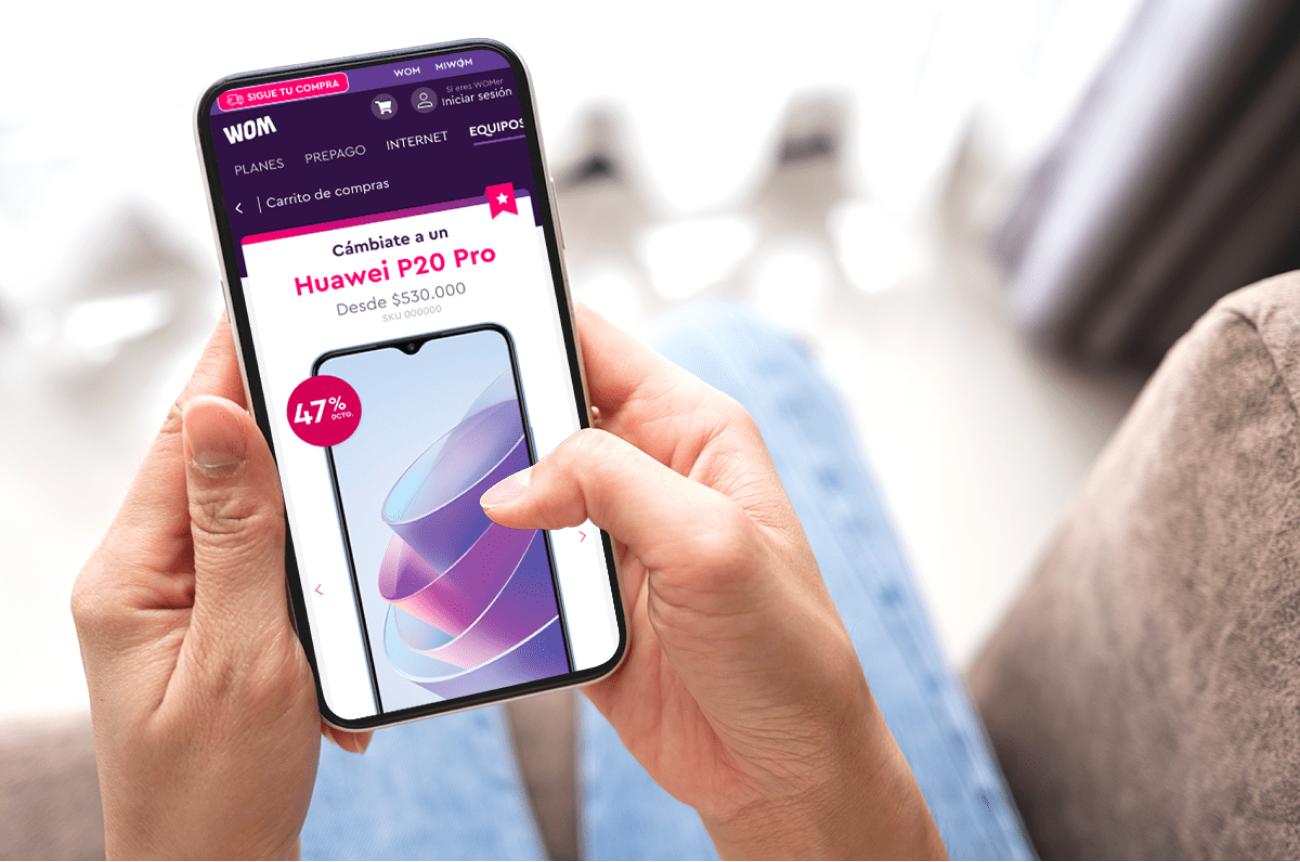
Design that digitally transformed the process of purchasing, renewing, prepaying, and number portability.
01
Context
WOM needed to evolve the way customers purchased and subscribed to digital products.
At the time, a significant part of the process relied on C2C —click to call—, which meant the digital experience was not fully autonomous. Users could start a purchase intention online, but the next step or final conversion often depended on assisted follow-up.
The challenge was to build a more complete, clear, and trustworthy online sales experience within WOM.cl.
This included mobile device purchases, renewals, prepaid products, and mobile number portability.
How might we create a simple, fast, and trustworthy e-commerce experience for telco products, reducing friction for both users and internal teams?
02
The challenge
Design an e-commerce platform capable of supporting different products and commercial flows.
- Simplify the purchase and subscription experience for mobile devices.
- Improve portability and renewal flows.
- Reduce dependency on manual or assisted processes.
- Deliver clear, transparent, and timely messages throughout the journey.
- Connect the digital experience with internal business capabilities.
The challenge was not just to design an online store. It was to translate complex telco processes into flows that felt understandable, efficient, and reliable for users.
03
What I did
I worked on the UX/UI design of the e-commerce experience, collaborating with the team on flows, components, and interaction patterns for the new platform.
The work started with a discovery and benchmarking phase, where we analyzed direct telco competitors and international references from the industry.

We aimed to understand which products and services were being sold online, how digital subscription flows were solved, and where there were opportunities to differentiate the experience.
I worked on:
- Benchmarking national and international references.
- Analyzing best practices in telco e-commerce.
- Designing purchase, renewal, and portability flows.
- Defining components for the device catalog.
- Designing components for mobile plans.
- Collaborating on WOM’s transversal Design System.
- Creating patterns for states, validations, and messages.
- Aligning with product, business, and development teams.
04
Defining the experience
The experience needed to balance business goals, operational constraints, and clarity for users.
In telecommunications, buying a device or subscribing to a plan is not a simple transaction. It can involve validations, product selection, commercial conditions, availability, portability, plan combinations, and background checks.
Because of this, the design focused on helping users move forward with confidence and without losing context.
Some of the questions that guided the design were:
How do we make the flow fast without losing clarity?
How do we present commercial information without overwhelming users?
How do we explain validations and states in a simple way?
How do we connect devices, plans, and portability into a coherent experience?
How do we reduce friction for users and internal teams?
How do we design reusable components that can scale across future flows?
05
Components and patterns
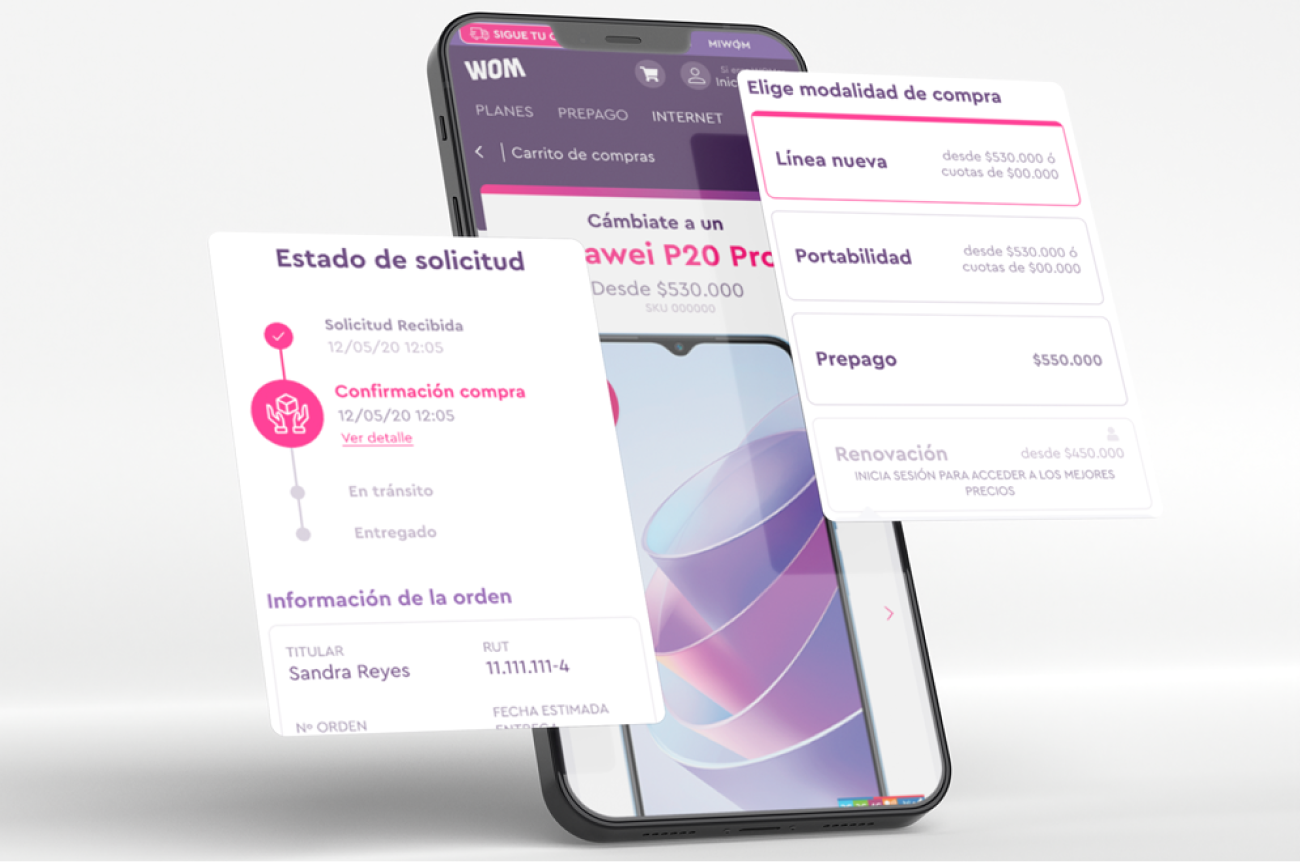
As part of the project, we started building specific e-commerce components inside a dedicated Design System file.
This helped create a reusable foundation for different flows and reduce inconsistencies across screens.
Some key components included:
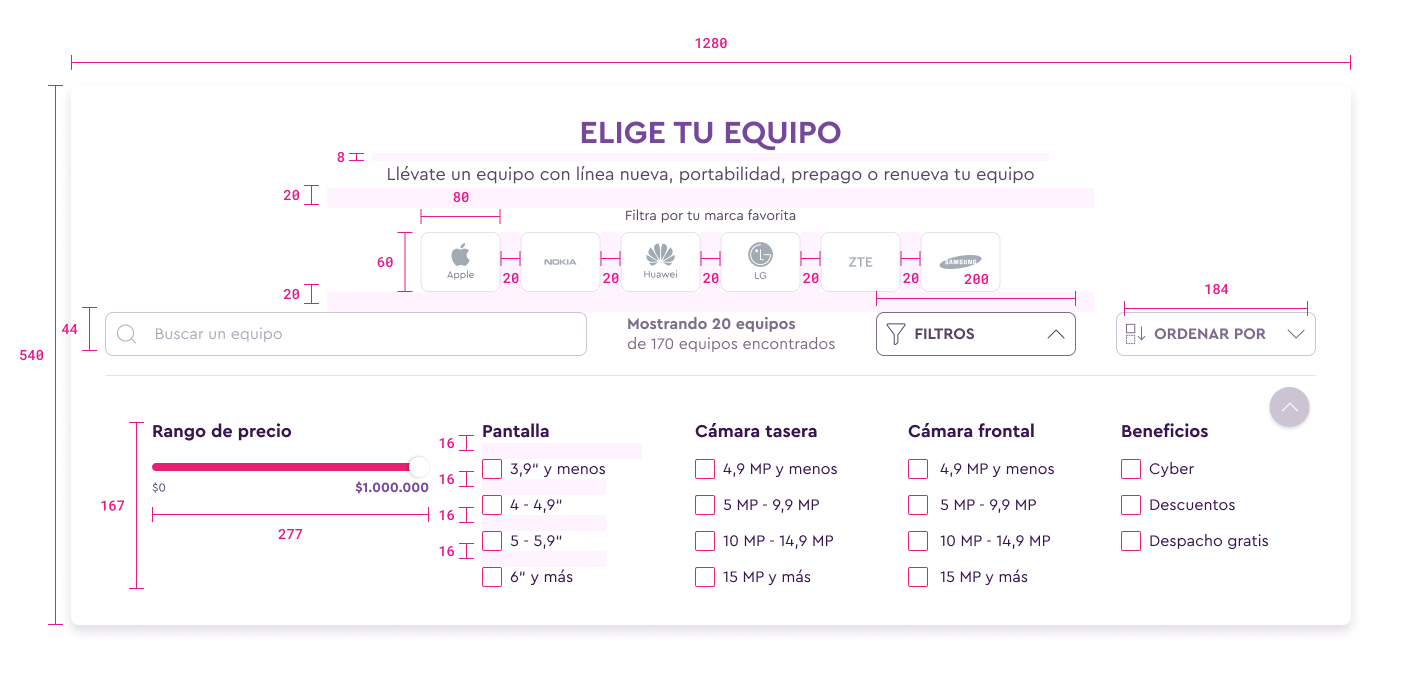
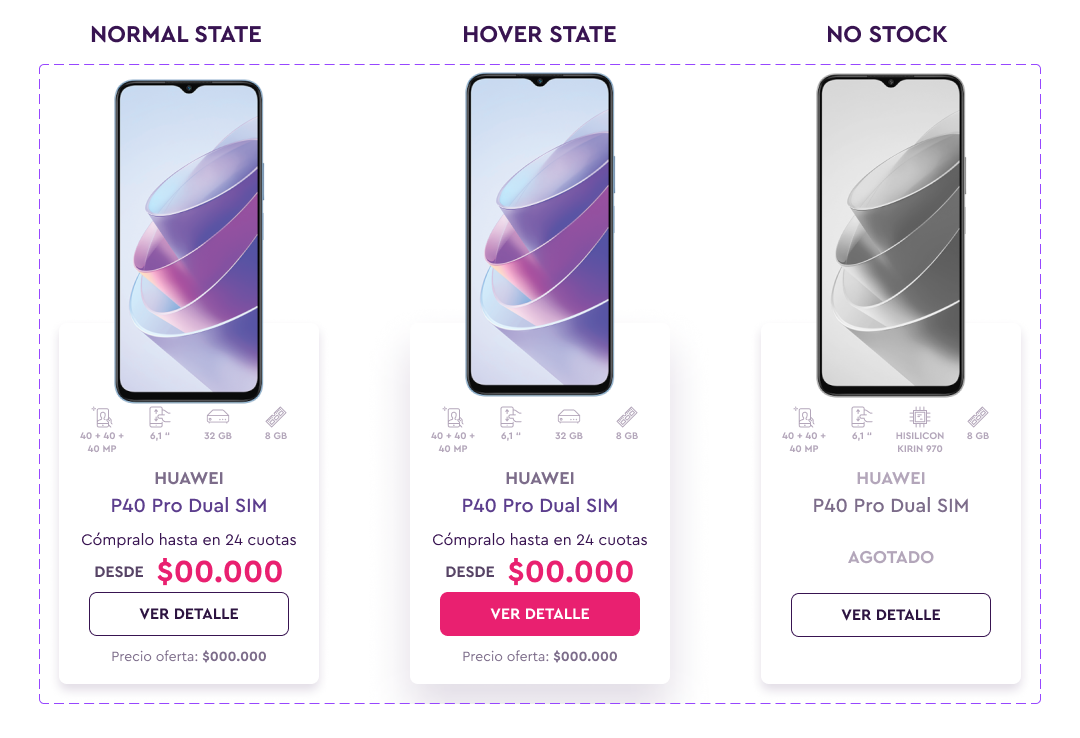
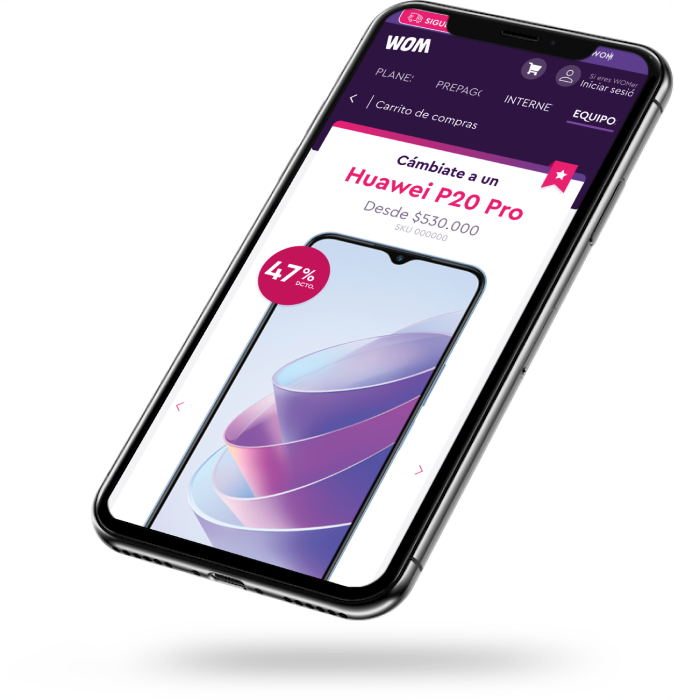
Device catalog
Components to display mobile devices, features, availability, prices, and states.
Catalog filters
Elements to help users explore and compare devices more efficiently.
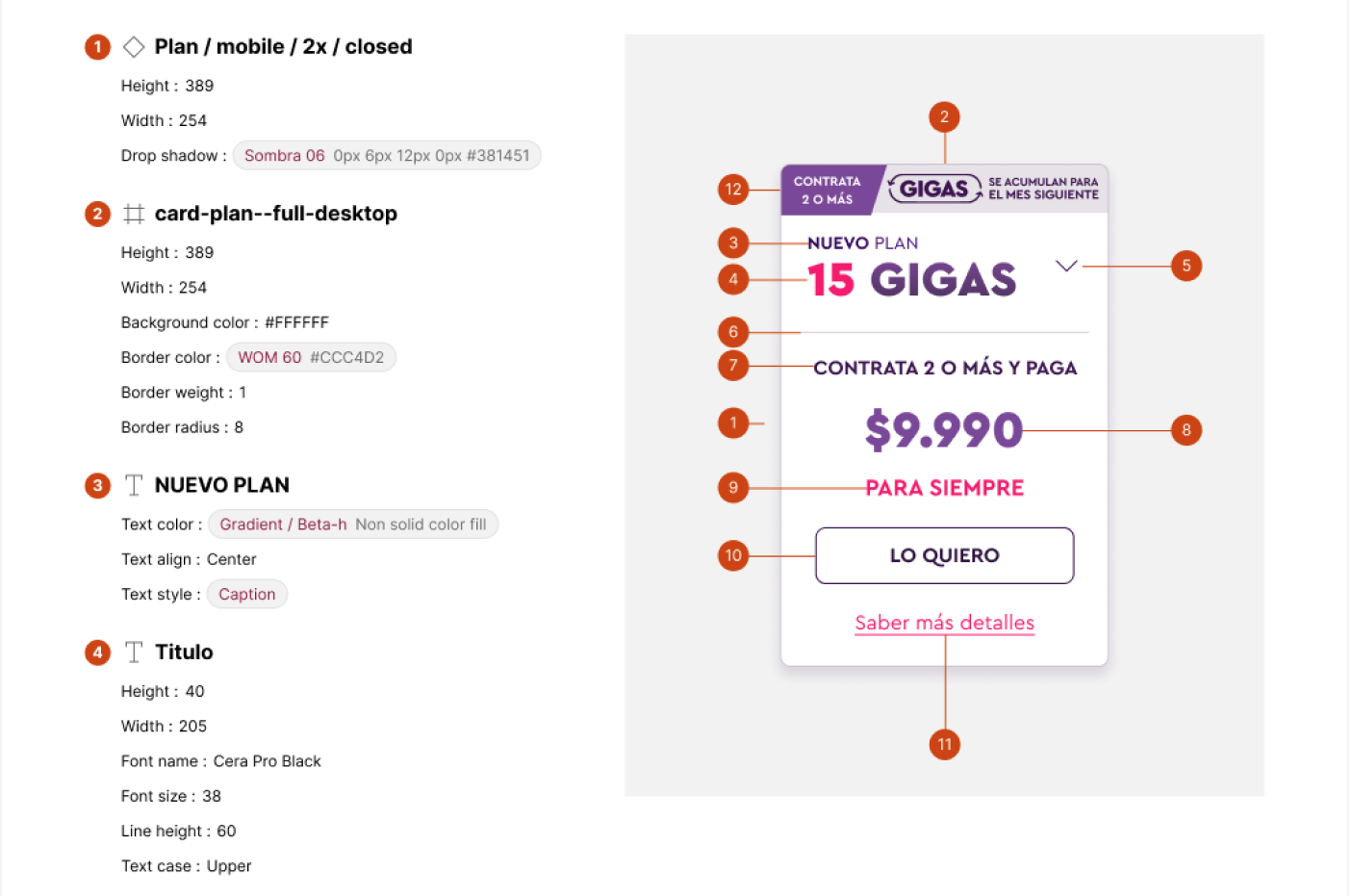
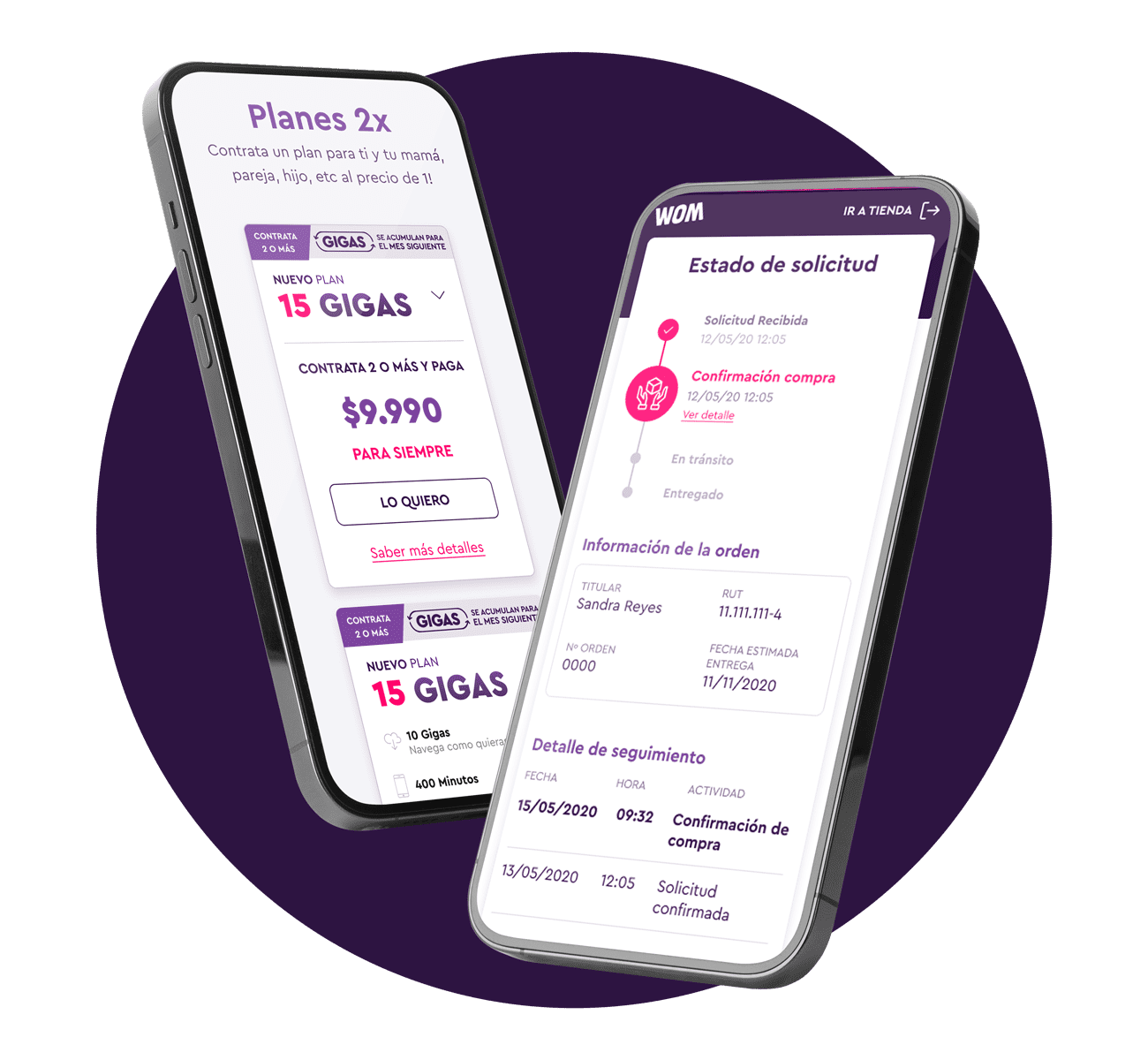
Mobile plans
Components to represent plans, benefits, conditions, and possible combinations with devices.
States and messages
Patterns to communicate validations, errors, confirmations, and state changes throughout the flow.
Cross-selling
Structures to connect mobile plan subscriptions with device purchases in a contextual and useful way.
06
Impact
The project helped WOM.cl move toward a more complete online sales experience.
It contributed to:
- Digitizing key commercial flows.
- Reducing dependency on assisted processes.
- Improving clarity in purchase and subscription flows.
- Creating reusable components for e-commerce.
- Strengthening visual and functional consistency.
- Improving collaboration between design, product, and development.
- Enabling cross-selling opportunities between devices and mobile plans.
This project reinforced my ability to transform complex processes into clearer, more trustworthy, and scalable digital experiences.
07
Learnings
This project allowed me to deepen my experience in e-commerce design within a highly competitive and operationally complex industry.
I learned that a good purchase experience is not only about having an attractive interface. It also requires clear information, timely messages, well-designed validations, and a strong connection between product, business, and technology.
It also reinforced the importance of designing with a systemic mindset: every component, state, and message needed to contribute to a more coherent experience.
In telco products, trust is built at every step of the flow. A clear validation, a simple comparison, or a transparent message can make the difference between moving forward or dropping off.
This project strengthened my interest in designing digital experiences that not only improve conversion, but also reduce friction and help people make better decisions.
This project allowed me to transform complex processes into clearer, more trustworthy, and scalable digital experiences.