product design • front end
Tracking Chilexpress
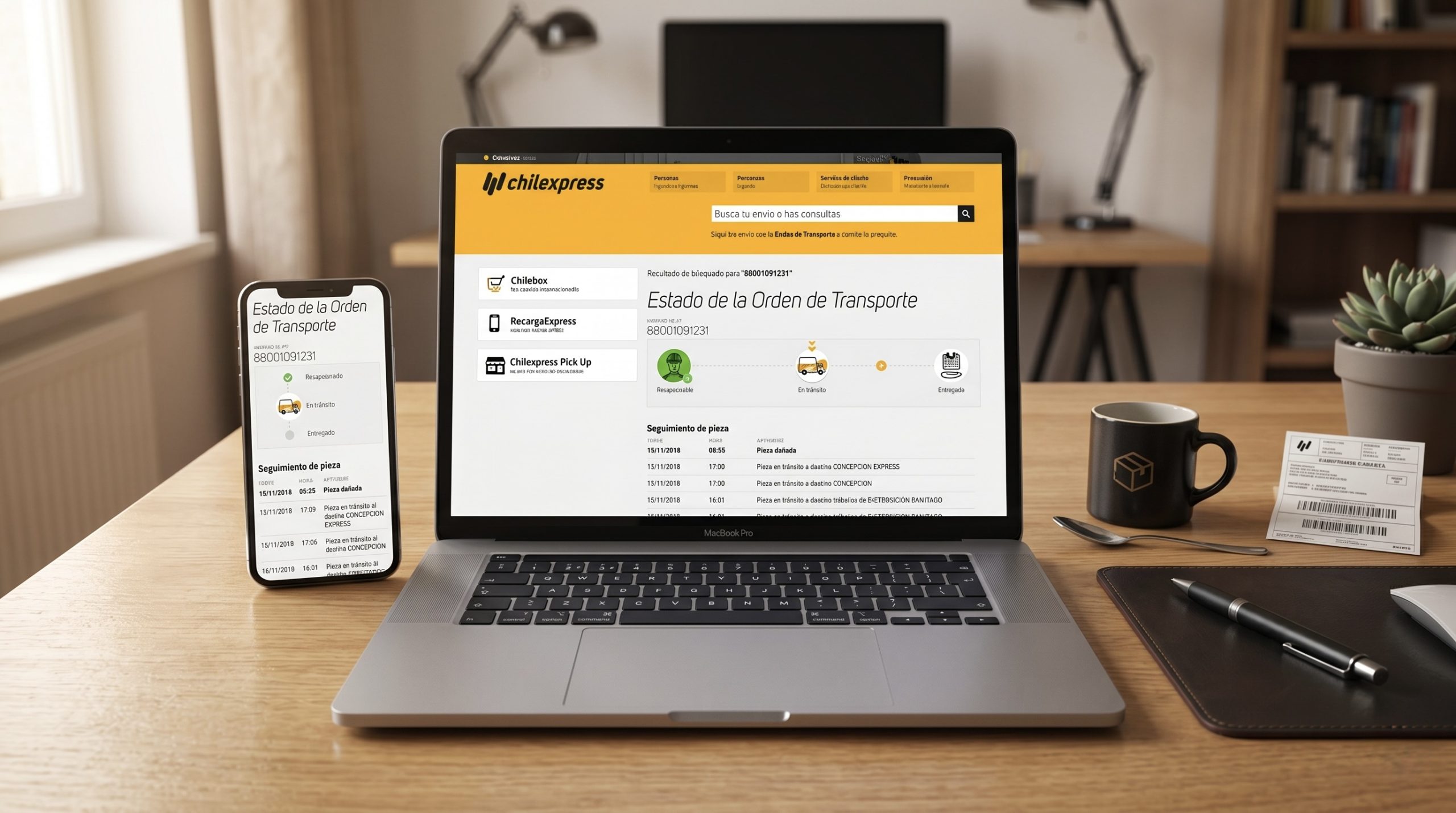
Design of a tracking experience that simplifies how people check, understand, and trust the status of their shipments.
01
Context
Chilexpress needed to renew its digital parcel tracking experience, one of the most relevant touchpoints in the user journey.
Tracking a shipment is not just an operational query. For many people, it is the moment where they seek certainty, control, and reassurance about something they are waiting to receive or need to deliver.
The previous experience presented opportunities for improvement in clarity, language, status visualization, and understanding of the shipment’s real progress.
The challenge was to transform complex logistics information into a simpler, more transparent, and more useful digital experience.
How might we make parcel tracking clearer and more trustworthy for users without losing operational accuracy?
02
The challenge
Redesign the digital parcel tracking experience.
Simplify how users enter and check their tracking number.
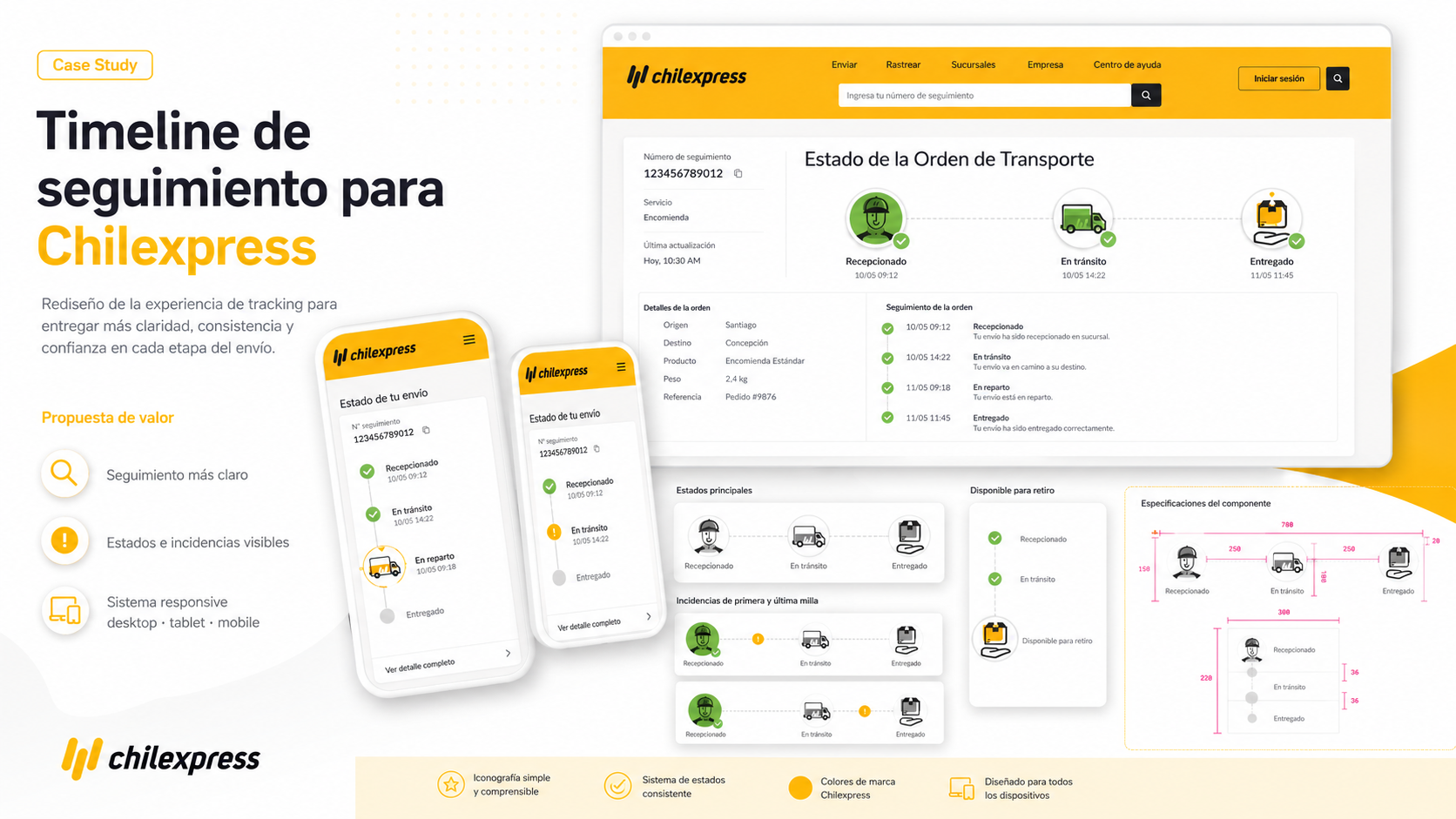
Improve the understanding of shipment statuses.
Reduce technical or unclear language.
Identify which information is truly relevant for the end user.
Align the visible experience with internal processes and operational systems.
The challenge was not only to improve the interface. It was to translate a complex logistics process into an understandable experience, where each status helps users understand what is happening and what to expect next.
03
What I did
I worked on the UX/UI redesign of the tracking experience, collaborating with development, systems, and process teams.
The work started by analyzing the most recurring problems users faced when tracking shipments: entering the tracking number, understanding statuses, contact points, delivery, and experience evaluation.
One of the main focus areas was reviewing and simplifying the tracking status glossary, identifying which information should be shown to users and which should remain part of the system’s internal language.
I worked on:
- Analyzing recurring problems in the tracking experience.
- Reviewing the tracking number query flow.
- Cleaning and simplifying shipment status labels.
- Prioritizing information relevant to users.
- Designing the new digital UX/UI experience.
- Coordinating with systems, process, and development teams.
- Improving language and progress visualization.
- Supporting the process from redesign to launch.
04
Defining the experience
The experience needed to provide clarity without oversimplifying the operation.
In logistics, a shipment can go through multiple internal statuses, validations, movements, and exceptions. However, not all of those milestones are useful or understandable for the end user.
For this reason, the design focused on showing only the information people need to understand shipment progress, recognize the current status, and know what to expect.
Some of the questions that guided the design were:
- What does a person really need to know when checking a shipment?
- Which internal statuses are relevant for the end user?
- How do we reduce anxiety and uncertainty during the waiting period?
- How do we communicate progress, exceptions, or delays clearly?
- How do we make tracking feel trustworthy and transparent?
- How do we connect the interface with the operational reality behind the process?
05
Impacto
Making shipment tracking clearer.
Reducing complexity in status communication.
Improving users’ understanding of shipment progress.
Aligning operational language with user-facing language.
Strengthening trust during the waiting process.
Connecting design, systems, and internal processes.
Transforming a functional experience into a simpler and more useful one.
The value of the project was in turning complex logistics information into a clearer, more trustworthy, and more human digital experience.
06
Aprendizaje
This project helped me understand the value of design in experiences where trust is critical.
In a tracking flow, people do not only want to know where their shipment is. They also need to feel that the information is clear, updated, and reliable.
I learned that a good logistics experience depends not only on the interface, but also on language, information hierarchy, and the connection with internal systems.
It also reinforced the importance of working closely with technical and operational teams. To simplify what users see, you first need to understand the complexity behind it.
Designing tracking is not just about showing statuses. It is about helping people reduce uncertainty in a moment where they need clarity.
Many times, less is more